Friday, January 20, 2012

How To Achieve A Clean Recording

1. Make sure you have a good microphone. If you start off with garbage, all you can make in the end is "polished garbage". An MXL 990 is a good one to start with and it's very cheap; only $50. With the proper mix this thing can do magic, but in most cases, what you pay for is what you get.
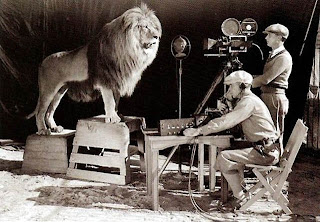

2. Experiment on different mic positions while recording (close to you, far from you, etc). Some voices call for different positions. Also, the desired effect can call for a certain position as well. If you want to sound like you're in someone's ear (Which isn't a bad thing) then you want it close. If you want to scream, back up!

3. Don't over edit your vocals. This is a huge problem that I see people do all the time. A lot of people add a bunch of effects on the master track of their song making the whole song reverbed or compressed. This is a terrible practice. Leave the master track alone unless you're adding a slight limiter to prevent clipping or something else very light. You don't want to over compress or over EQ anything. A lot of the time, all that's needed is to, compress it and add little touches of EQ boost/decrease.

4. There is no "magic setting" you can put a compressor on. Different songs and voices call for different effects. The best way to skillfully use a compressor is to understand how it works and tweak it according to your mix. Most compressors have the same knobs as follows: "Threshold" which is the cutoff where the compressor will turn on. Once the volume of the track being compressed reaches the number you've set, the compressor will take any sound louder than that setting and bring it down, or compress, it. Then there is the "attack" setting which is how fast the compressor comes into effect when your track starts sounding. Then the "release" setting which is how long your compressor will keep working even once the sound is done. These and + & - gain (volume) knobs are the most common compressor settings.

5. Recording multiple takes is ideal. You'll almost never get the job done with one take. Record multiple times just to be able to pick out from the best one. If you think your vocals need to be filled more, don't just add a chorus effect, record it again, over dub the takes and pan them out. You'll get the job done much easier and efficiently that way.

6. Adding reverb and delay is also called for in some songs, but don't overdo it! In general, you'll want reverb and delay on most of your songs, but you want it so low that unless there's a drop in the beat, or someone with very good ears is listening, you don't want listeners to know it's there. I'm sure now you're thinking "If they don't know it's there, why waste time putting it in?". Well think about this, (This is mostly aimed at producers/engineers) but haven't you heard something in a song that you barely notice, but if it wasn't there, you'd feel like something is missing? The same concept applies here. So add some slight reverb and delay if you feel your vocals are missing a little presence.

7. Make sure you're loud! You're never gonna make a good recording if you're scared to sound like you have some confidence in yourself. You need to attack the mic like you know what you're doing and you know you're gonna do it well. I cannot stress on this enough. This can be the difference between a good song and a flop. I've had many people submit songs to me where they weren't putting enough feeling into it. The real bad part is, it can't be faked; I can tell you to put feeling into your recording all day, but if you are only "getting louder" you'll sound like a screaming, non-confident artist and that's not the desired effect either. Have some confidence; listeners will be able to tell.

8. Don't be shy! I know some people are recording in their bedrooms and other "not recording friendly" environments and they have people outside of the door that can hear them. A lot of people are shy and don't want people to hear them record. Here's a huge tip for those people; get over it. I know it feels stupid because you're just yelling rhymes into this metal object, but they're gonna hear you, and if you sound like you're scared for people to hear you record, listeners will notice. Again, have confidence.

9. Lastly, take a listen to some songs you've bought. Always buy you're music unless its being given by the artist for free. You're in the music business, don't steal from it!. Compare your mix to one that's been professionally mixed and don't be afraid to mimic it a bit. You're voice is different from theirs, but just try it out. It's a great way to learn different techniques.

Friday, January 13, 2012

How to Promote Your Music in 2012

A couple of decades ago it was unlikely an aspiring musician would get the opportunity to record their own music. If you were in a band and wanted to record a proper sounding album you would need to be signed to a record label which would pay for the advance for you to make an album. The advances in digital recording in the last decade have it made it possible for musicians with even a modest budget and proper skills to make something that may be worth listening to. Although, it's great that musicians now have the ability the record in the privacy of their own homes it has saturated the market with an excess of music on the internet that would take endless hours to sift through. Luckily, if you have recorded something worth listening to their maybe a couple of ways you can rise above the masses and get your music heard.


1.Streaming music services

This day and age more and more people are subscribing to different online streaming music services like Spotify, MOG, and Pandora. A lot of musicians might not know that submitting your music to these online services is usually a very straight forward process. For example, in order to submit your music to Spotify you would have to license your music through an artist aggregator like CD baby or to Ditto. Services like this also make it possible to submit to other digital services like Itunes or Amazon at the same time. The process for submitting your music can vary for each streaming services but from what I have researched I haven't found one that is to hard to accomplish.

2.Social Media

If you haven't already it is integral that you join as many social media outlets as possible. Everyone knows about Facebook and Twitter but there are other sources as well like Pinterest, Bebo, Netlog that could be a valuable way to promote your music. There are lots of interesting ways you can market your music through social media.Think outside of the box so people can get interested and involved with your music. For example, bring a video camera in the recording sessions of your band making a new album, then post the videos on YouTube and then go on Facebook to tell all your friends about it.

3. Radio Stations

Don't forget about the power of radio stations. The good news is that are a lot of small independent radio stations on the internet that you can submit your music to. Services like shoutcast and live365 have thousands of radio stations that you can try to submit your music to. You obviously want to submit to stations that cater to your genre and have a decent amount of listeners. Sirius radio has over 20 million subscribers so make sure you submit your music to them.

4. Soundcloud

If you haven't heard of Soundcloud yet you need to start taking advantages of these services. Soundcloud is a service that dedicated to letting people distribute and listen to sound files. It is unique in that it lets artists have their own distinctive URL which they can then embed on their own website. It is also very easy to integrate with Facebook and Twitter. If you are a paid member you are granted more hosting space and can distribute to more groups.

5.Get reviewed

Hopefully, other people will appreciate your music as much as you do. That's why it important to submit your music to different magazines and websites.A good review on a popular website like "pitchfork" can catapult a band from playing local bars to being on a national tour. Tiny mix tapes, drowned in sound, and the a.v. club are just a couple of places you should be submitting your music to.

Saturday, January 7, 2012

How Can Young Music Composers Enhance Skills Through Music Forums?

Internet serves as the best tool to gain insight into several things. Just like you can conduct research for your school project online, you can also get lots of information about the entertainment industry, religion, finance, politics and everything that you read and watch through other mediums of communication. The music industry does not lag behind in this race and you can see a visibly stunning amount of literature and resources available at music forums to help the aspiring musicians.


These music forums are administered under the guidance of some of the best musicians who are willing to help out the budding musicians to create innovative music. The best part of these music forums is that young musicians from all parts of the world can participate and share their knowledge and art with others. Music is discussed and improvised together by the young musicians and established musicians to create a stimulating piece of music. The recognized musicians also help these budding musicians by providing resources like vocal software and hardware that smartens up the music completely.

In these music forums, the young musicians can find lots of useful tips, resources, and ideas from other artists who have established themselves through such forums. Besides these resources, the musicians get the chance to become actively involved in the music community and get great insight into several music genres. Also, since these communities serve musicians from all parts of the world, there is a great way to gain insight about the heritage of music of other countries. For example, the folk music has recently been a source of inspiration for many musicians and they have composed inspirational music, amalgamating the folk and urban music in their albums.

Also, there is a lot of competition going on in the music industry, which is an encouraging element for many aspiring musicians who want to make it big soon. The established musicians at the music forums provide opportunities to these young and talented musicians to build careers in the music industry.

While making the most of the music forums, the musicians should keep in mind certain things. Firstly, they should use these forums as a creative tool and a platform to learn new things. They should seek out ways to learn by interacting with other musicians and seniors. And most importantly, they should not cause any harm to the forum and its resources and other musicians at the forum. The discussions should be free of spam and useless posts, whereas the musicians should keep their profiles and posts informative, well-organized and uncluttered so it is easy to go through them.

Tuesday, December 6, 2011

5 Tips To Make Your Guitar Mixes Rock!

Now I know there are thousands of variables involved as well as opinionated ways of doing this, that's why I'm going to tell you 5 tips I use to make my guitars stand out to help make my mixes sound huge!

1. Double Track Your Rhythm Guitars:

You can easily thicken up the sound of your mixes by doubling your guitar tracks. Yes I know this is not really a 'mixing' tip but when you use both guitars in the mix it can beef up your guitar tracks. PRO TIP: You can even play around with changing the tone slightly on the second track to add even more emphases on certain characteristics of the playing. Say you want one to be more beefy and use another for note clarity. Just one of many ways you can use that to your benefit.

2. Pan Those Tracks:

The next step is to pan those rhythm guitars you tracked. I like to start at hard panning them both, one left one right. If they are sounding too separate bring them more to the middle, 70-80 is a good area where I like to put my guitars, especially for the slower parts. Faster more intricate playing can benefit from going all the way left or right. Panning these guitars helps separate the sound and clear up the middle for other instruments (i.e. kick drum, bass guitar) that need to be there. Turn that pan knob and immediately hear the results.

3. High Pass Filter Your Guitars:

OK yes, I know this is situational depending on the tone/style of guitar you are tracking. But in most times I mix I like to roll off some of those lows to clear up the bottom section and help your guitars not 'fight' so much with the bass and kick drum. I like to start in the 100,200k area and roll it off accordingly to the mix. Let your ears do the work, roll it off as you listen to a section and when you hear the guitars start to'thin out' back off a hair and Voila! You now have cutting clear guitar.

4. Did Someone say Plug-ins?

Yes you read that correctly. But dude, I thought you are always preaching 'crap in crap out, get it right from the source and you wont have to fix anything come mix time??!' Yes you are correct. I do live by that, but remember music and mixing is an art form. There are rules, but there are not. Weird right? I like to look at using plug-in's like using salt when cooking. You don't want to add too much because it will taste bad, but using just enough will make whatever your eating taste much better! Don't be afraid to add a little compression, or tube saturation/distortion to give your tracks get a little more omph! Experiment, you might find something you really like!

5. EQ Subtraction

The last tip here is my all time favorite, and yes it does play off of tip number 3. Subtracting EQ in certain bands is an ideal way to let other instruments in your mix cut through in return making everything (including your guitar tracks) sound bigger, cleaner and overall better. Especially with high gain guitar tracks cutting some of the lower (or) higher mids out is a good way to tone it down and get your guitars working in cohesion with other primary instruments. Don't be afraid to get the scalpel out and start cutting EQ like your a mad surgeon. Just remember to do it while you are listening to your mix, never solo your guitars and start cutting that would not be pretty.

Monday, December 5, 2011

The Oath of the Horatii

The Oath of the Horatii by Jacques-Louis David is both an excellent example of French Neoclassical painting (click to read more on Neoclassicism from the Met) and of a very strong composition within a painting.  David chose this subject for his first royal commission.  Neoclassical themes had been popular since the Renaissance and in the mid-18th century
Neoclassical art is defined as a style that was strongly influenced by the art and history of ancient Greece and Rome.  While at the French Academy David won the Prix-de-Rome and spent several years in the city during which time he was strongly influenced by Ancient Roman art and architecture.


The Oath of the Horatii is an interesting story, the battle between the Roman Horatii family and the Curiatii family from a neighboring city was told by the Ancient Roman author known as Livy.  The Horatii brothers are swearing allegiance to Rome on the swords that their father is holding up.  All are ready to die to defend their country.
The Oath of the Horatii, Jacques-Louis David, 1784, Louvre, Paris

This is an enormous painting measuring nearly 11 feet high by 14 feet long and the figures were shown as life sized. The focal point for the viewer is the raised hands and swords of the oath, even if the viewer doesn't know the story it can be easily inferred that this is a dramatic event. 

The setting is very sparse and the sparseness works well in framing the events and not detracting from the figures.  To the right we can see the women of the story, their mother and sisters, who are obviously in despair.  This foreshadows the events to come and serves as an interesting counter balance to the strength of the brothers.  One of the sisters was engaged to a man from the rival family and she knows that someone she cares about will most certainly die in the battle.

Why would such an ancient story, one that wasn't a frequent theme be painted in late 18th century France? 

There were several reasons that Neoclassicism became popular at this time.  Visually it was quite a contrast with the frivolous Rococo style that had currently been in fashion.  It was favored by royalty as Neoclassical work reflected the power of the Roman Empire.  It was equally favored by both the American and French Revolutionaries as it tied into themes of self sacrifice and the Roman Republican period.

The ruins of Pompeii were rediscovered in the mid 1700's and in the following years the site was excavated; this led to a new understanding of and enthusiasm for Roman culture.  The 18th century is commonly referred to as "The Age of Enlightenment" and many of the great intellectuals and philosophers were influenced by the rational philosophies of their Classical counterparts.


The Tennis Court Oath, Jacques-Louis David, c-1791, Louvre, Paris
pen drawing with sepia ink wash

While The Oath of the Horatii was commissioned by the French King, David was actually very much on the side of the revolutionaries in the 18th century.  He created the above drawing of the Tennis Court Oath, where nearly 600 members of society gathered less than a month prior to the storming of the Bastille and vowed to remain together until a French Constitution was written.

David was clearly influenced by his earlier composition for this sketch, which he later turned into a painting.  The raised arms created another strong central focal point for the viewer.  Even without knowing the history behind the work the viewer can discern that an emotionally charges and dramatic event is unfolding.  Just as in the other work a symmetrical architectural background frames the scene.

The Oath of the Horatii, Armand-Charles Caraffe, 1791
Pushkin Museum, Moscow


 Armand-Charles Caraffe was a student of David's and he also painted a version of this theme.
Compare the two paintings, by looking at the two very different ways that the artists chose to arrange the figures we can see that the David painting is much more dynamic.  The theme of the Oath that the Horatii family took wasn't a common one and Caraffe would certainly have been influenced by David.  However by reversing the direction of the brother's hands the composition doesn't have as strong of a focal point.  Dramatic tension was also created in the earlier version by the use of chiaroscuro (modeling form with strong darks and lights).


Caraffe does a good job of depicting this and created an interesting work, but Jacques-Louis David's version has remained one of the most iconic images of Neoclassical French painting.

Wednesday, November 16, 2011

Trompe-l’oeil in art

In January of 2010 I saw a really interesting exhibit at the Palazzo Strozzi in Florence: Art & Illusions: Masterpieces of Trompe-l'Å“il from Antiquity to the Present.  That exhibit got me to start thinking of the role of  trompe-l’oeil in art.  “Trompe-l’oeil” is French for to trick the eye, it is more than just a realistic work of art but it is something created to fool the viewer or at least make the viewer question what they are seeing.  It is a work which creates an optical illusion, however the term “Trompe-l’oeil” is used to describe a variety of illusions in art.  Some are entertaining and some create quite sophisticated illusions.

There have been many examples throughout time: Ancient Roman, Medieval, Renaissance and Baroque as well as modern and contemporary examples.  Let's look at a few of them to compare.
Still life with glass bowl of fruit and vase, wall painting, Pompeian painter c- 70 AD,
The National Archaeological Museum of Naples, Italy

In the wall paintings uncovered at Pompeii and Herculaneum there are many examples of trompe-l’oeil.  The most typical were similar to the example above showing still-life objects sitting on a "shelf" they were created to show off the skill of the artist and to amuse the viewer.  There were also several mosaic floors created as a trompe-l’oeil showing discarded fish bones.  This skillful works also alluded to the wealth of the owner of the home.

It was said in Ancient Greece that there was a contest between two painters, Zeuxis and Parrhasius.  Zeuxis painted grapes that were so realistic they fooled birds into trying to eat them.  However Parrhasius won the contest as he even fooled the other artist; he had painted a pair of curtains and Zeuxis thought that his painting lay behind the curtains.

I don't know if the story is real, but regardless it demonstrates that trompe-l’oeil has been a part of art for centuries.

Painting of a false dome, Andrea Pozzo, 1685, Chiesa di Sant'Ignazio, Rome, Italy
photo- © Jean-Christophe BENOIST/ public domain, via Wikimedia Commons  

Painter Andrea Pozzo cleverly created a false dome within the church of Sant'Ignazio in Rome.  The illusion works perfectly if the viewer is standing in a certain area, they would look up and see a "dome" which is in fact a flat surface with a fake dome painted in.  It is clever as no one would be expecting this type of trompe-l’oeil in a church.  However if the viewer is standing in another area the trick doesn't work.
Architectural trompe-l'oeil gallery, Francesco Borromini, Palazzo Spada, Rome, 1638 
Trompe-l’oeil in art can also be found in sculpture and architecture such as this example by Borromini done earlier in the century. This gallery is a tour de force of trompe-l’oeil in which shrinking rows of columns and a rising floor create the illusion that the gallery is four times longer than it is.  The illusion is made through the use of light, spacing of the columns and the fact that the two archways are vastly different heights.

At first glance Borromini’s gallery is quite long, leading to a statue at the end.  The statue is about three-quarters the height of the distant doorway.  However when I visited a guide walked from one end to the next to show our group of students the illusion; at the far end she was the same height as the statue, but as she walked along the path we saw she was only about a quarter of the height of the first archway.

This can be explained when you realize that the two doorways are of different heights.  However since Borromini constructed this with seemingly perfect perspective, the false perspective tricks you into believing that both doorways are of the same height if you walked from one to the other.

The Staircase Group (Portrait of Raphaelle Peale and Titian Ramsay Peale), Charles Willson Peale, 1795,
oil on canvas, Philadelphia Museum of Art; The George W. Elkins Collection

 In this work early American painter Charles Willson Peale creates a trompe-l’oeil by painting life size portraits.
“To enhance the illusion, he installed the painting within a doorframe in his studio, with a real step in front. Rembrandt Peale, another son, recalled that his father's friend George Washington, misled by Peale's artifice, tipped his hat and greeted the two young men as he walked by.”*
*Darrel Sewell, from Philadelphia Museum of Art: Handbook of the Collections (1995), p. 267.

Again the Art & Illusions: Masterpieces of Trompe-l'Å“il exhibit was one of the most interesting art exhibits I have seen: 150 objects related to illusion. Examples really did “trick the eye” into thinking surfaces weren’t flat, objects were coming off the canvas, the canvas was  a piece of wood, or a cabinet with open doors, or something was sculpted rather than painted.  Some  were truly remarkable and I wanted to reach out and touch them as the illusion was so convincing.  

I actually did get tricked with a Duane Hanson sculpture. Hanson was a late 20th century American “hyper-realist” who sculpted people and used real objects in his sculptures, in that exhibit it was a mom pushing a stroller. I didn’t really look at “her” I thought it was a mom pushing a stroller until the person next to me got so close they set off an alarm and then everyone turned to stare and I was truly startled that they weren’t real.  They had her set up as if she was a spectator looking at a painting, which added to the illusion.

That is probably why trompe-l’oeil has worked well and has endured to the present day, because so many examples really do fool the viewer.

Monday, November 7, 2011

Continuous Narrative in Art

What is meant by the "Continuous Narrative" in art?  Many artworks contain a "narrative" or representation of an event.  The continuous narrative is a way to tell an entire story within one artwork, the same characters show up repeatedly in order to give a timeline of events in the story.  Often the same groups of characters are shown right next to each other in the same painting or sculptural frieze. 


These side by side scenes can be thought of as pre-cursors to modern day comic strips.  They weren’t shown in different panels, but this would have been understood by contemporary audiences to be telling a story.

Column of Marcus Aurelius, detail, bottom three bands of helical relief 
Emperor's campaigns against the Germans and the Sarmatians. 180-185 A.D., Rome
photo- © Simone Ramella / public domain, via Wikimedia Commons  


This was used as far back as ancient Assyrian and Babylonian art and remained popular throughout much of art history to depict an entire event from start to finish.  The Column of Marcus Aurelius in Rome has one long sculptural frieze that winds up the entire length of the column.  The column shaft measures nearly 100 feet (29.62 meters) long.

It is nearly impossible for a viewer on the ground to look up and see the entire story and know what is going on.  The sculptors took this into account and made each band slightly wider as it wound up the column.  The heads of the figures were also shown slightly larger than proportionally correct so that they could be recognized from below.

As this column shows several military battles where the Romans were triumphant, the same soldiers and military commanders are shown over and over again.  Objects such as trees, rivers, horses and architecture help separate and frame each scene.


Column of Marcus Aurelius, c-193 A.D., Rome
photo- © Matthias Kabel / public domain, via Wikimedia Commons  

The technique of continuous narrative was used frequently in Renaissance painting.  A good example of this can also  be found in the large devotional panel by Gentile da Fabriano which shows the adoration (seen below).  
 Adoration of the Magi, Gentile da Fabriano, 1423, Uffizi Gallery, Florence
egg tempera and gold leaf on wood panel


The main scene shows the three Magi (or three wise men) as they have come to give gifts to the newborn Christ child.  However the Magi are shown in miniature in the scenes above, from the first time they see the Star of Bethlehem to the entire journey they make.  We can see the star several times as well and it ends up glowing like a golden orb over St. Joseph's head in the central scene.

In the detail (below) we can see a close up of the left arch of the painting and can make out the three Magi seeing the Star of Bethlehem for the first time.  In each of the other two arches the viewer can follow along with their journey.
Adoration of the Magi, Gentile da Fabriano, 1423, Uffizi Gallery, Florence
detail of the central upper register of the panel 


St. Peter is seen three times in the fresco below.  This fresco by Masaccio is especially interesting as the story does not occur from left to right as in most examples, but jumps from the center to the left and then to the right.  This biblical story was very well known, so the contemporary viewer would not have been confused by this.  The story begins in the central portion of the frame when the tax collector asks for the temple tax and Christ tells his apostles that they need to find money to pay the temple tax, he turns to Peter and tells him to look in the mouth of a fish in order to find the coin.  This event of course is a miraculous one.

Part two of the story takes place just to the left of the main action, St. Peter is wearing the same blue robe but has set his golden sash aside for a moment while he looks for a fish in the sea.  Then part three of the story jumps over to the right hand side where after finding the coin as Christ has said, St. Peter pays the tax.  Again to help the viewer keep track of St. Peter, he is shown wearing his blue robe and gold sash and the tax collector is the only person wearing a short tunic.


The Tribute Money, Masaccio, 1425, fresco, Santa Maria del Carmine, Florence

In his famous fresco cycle in Santa Maria Novella the artist Ghirlandaio has also used continuous narrative.  Remember from earlier blog posts that Ghirlandaio was in fact the teacher of Michelangelo.  Michelangelo was a student in his workshop during the time that these frescoes were being painted, so he would have worked on these as well.

In the panel showing the birth of the Virgin Mary, the birth is concentrated in the lower right hand portion of the frame.  However the Immaculate Conception (which refers to the fact that Mary's mother St. Anne was impregnated by just a kiss from her husband Joachim) is shown to us in the top left hand portion.  Therefore St. Anne is shown twice in the same room.  However that was understood by all to have occurred at two different times within the same story; even though each event took place nine months apart.


Immaculate Conception and Birth of the Virgin Mary, Domenico Ghirlandaio, 1485-90
Tornabuoni Chapel, Santa Maria Novella, Florence


In our final example (below) we are seeing the Rest on the Flight Into Egypt.  The artist David shows us that this is his theme rather than a typical portrait of the Virgin and Child by showing the holy family in the background in the woods.  By seeing two versions of Jesus and the Madonna, one in the foreground and one in the background, the viewer understands that they are both scenes in the same story.  The riding of the donkey is always understood in Renaissance painting as being part of the flight into Egypt from the Biblical story.

The use of the same figures in one panel, which David employs quite subtly in this work, is yet another example of the continuous narrative in art.


Rest on the Flight into Egypt, Gerard David, 1512-15
oil on wood panel, Museo del Prado, Madrid


Now that you have learned about the use of the continuous narrative in art you will certainly notice many other examples.


CAT MOONLIGHT

CAT MOONLIGHT CAT MOONLIGHT CAT MOONLIGHT CAT MOONLIGHT CAT MOONLIGHT CAT MOONLIGHT CAT MOONLIGHT CAT MOONLIGHT CAT MOONLIGHT CAT M...